Tesamorelin
This triple-blend combines two Growth Hormone Releasing Hormones (Tesamorelin, CJC-1295) with a selective ghrelin mimetic (Ipamorelin) to maximize pulsatile GH secretion. By targeting pituitary somatotrophs through distinct pathways, it synergistically amplifies endogenous growth hormone release for comprehensive metabolic and recovery research.
Key Research Highlights
- Synergistic Amplification: Combines GHRH analogs with a GHRP to significantly boost pulsatile GH release beyond single-peptide protocols.
- Body Composition: Investigated for reducing visceral adipose tissue while preserving lean muscle mass.
- High Selectivity: Ipamorelin ensures targeted GH release without significant spikes in cortisol or prolactin.
- Verified Quality: Lyophilized powder, ≥99% HPLC purity, ISO 17025 verified.
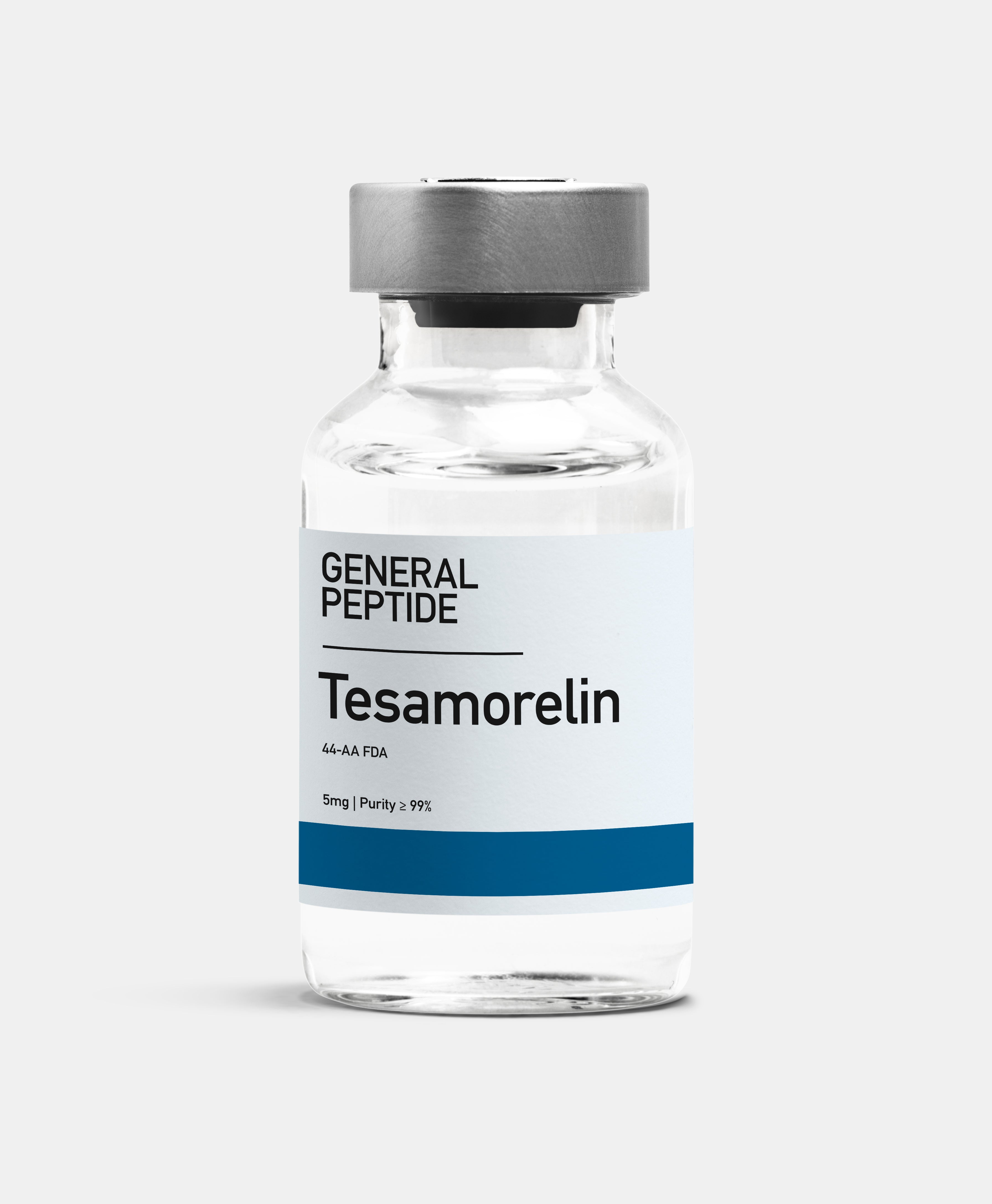
Tesamorelin (CAS 901758-09-6; MW 5195.9 g/mol; C223H370N72O69S) is a synthetic 44-amino acid analog of endogenous Growth Hormone-Releasing Hormone (GHRH) engineered with a trans-3-hexanoic acid modification at the N-terminus. This structural modification preserves full GHRH receptor binding affinity while dramatically enhancing resistance to dipeptidyl peptidase-IV (DPP-IV) enzymatic cleavage, extending the compound's activity window compared to unmodified native GHRH.
Tesamorelin is the only FDA-approved GHRH analog — approved as Egrifta for treatment of excess abdominal fat in HIV-infected patients with lipodystrophy. This distinction makes it one of the most rigorously characterized peptides available to research researchers, supported by multiple large Phase III clinical trials involving over 800 patients.
Mechanistically, tesamorelin binds and activates the GHRH receptor in the anterior pituitary — a class B GPCR signaling via Gs/adenylate cyclase/cAMP/PKA cascades. Receptor engagement stimulates somatotroph cells to synthesize and release endogenous growth hormone (GH), which drives hepatic production of Insulin-like Growth Factor-1 (IGF-1). Clinical data show average IGF-1 elevations of approximately 181 ug/L in men. Unlike exogenous GH administration, tesamorelin preserves natural pituitary feedback loops — maintaining the body's own negative-feedback mechanisms, an important experimental control variable in GH axis research.
Beyond visceral adipose tissue (VAT) reduction, clinical studies have documented reductions in carotid intima-media thickness (cIMT), C-reactive protein (CRP), and triglycerides. Emerging data indicate potential cognitive benefits — improved executive function and memory in healthy older adults.
| Compound | Formula | MW | CAS No. | Sequence / Structure | Receptor / Target |
|---|---|---|---|---|---|
| Tesamorelin | C223H370N72O69S | 5195.9 g/mol | 901758-09-6 | 44-AA GHRH analog; trans-3-hexanoic acid N-terminal modification | GHRH receptor agonist (Gs/cAMP/PKA); anterior pituitary GH secretagogue |
The following compounds operate through distinct, non-overlapping mechanisms that complement this product's research pathways. Each is independently available from the General Peptide catalog.
Ipamorelin is a selective pentapeptide GHS-R1a (ghrelin receptor) agonist (CAS 170851-70-4; MW 711.9 g/mol) that functions through Ca2+/IP3 signaling to stimulate pulsatile growth hormone release. As the most selective GHRP available, it does n...
CJC-1295 (No DAC) is a modified 29-amino acid GHRH analog featuring four amino acid substitutions that enhance alpha-helical structure and confer 49x greater receptor potency versus native GHRH. Without the Drug Affinity Complex (DAC), this ver...
MOTS-c is a unique 16-amino acid peptide encoded by the mitochondrial genome rather than nuclear DNA. It functions as a potent metabolic regulator and "exercise mimetic" by translocating to the nucleus to activate AMPK, optimizing cellular ener...
Retatrutide (LY3437943) is an advanced 39-amino acid synthetic peptide that simultaneously activates GLP-1, GIP, and glucagon receptors. This triple-agonist action coordinates appetite suppression, enhanced insulin dynamics, and increased hepat...
NAD+ is a vital dinucleotide coenzyme present in all living cells, central to cellular energy, DNA repair, and signaling. It fuels ATP production and acts as the rate-limiting substrate for Sirtuins, PARPs, and CD38 enzymes. Because NAD+ levels...