Ipamorelin
Ipamorelin is a selective pentapeptide GHS-R1a (ghrelin receptor) agonist (CAS 170851-70-4; MW 711.9 g/mol) that functions through Ca2+/IP3 signaling to stimulate pulsatile growth hormone release. As the most selective GHRP available, it does not stimulate ACTH, cortisol, or prolactin at research concentrations, making it ideal for clean GH secretagogue research. The pentapeptide structure provides enhanced metabolic stability while maintaining high receptor affinity. Ipamorelin demonstrates synergistic effects when combined with GHRH analogs, activating complementary pathways for supra-additive GH release in studies examining endocrine function, body composition, and metabolic regulation.
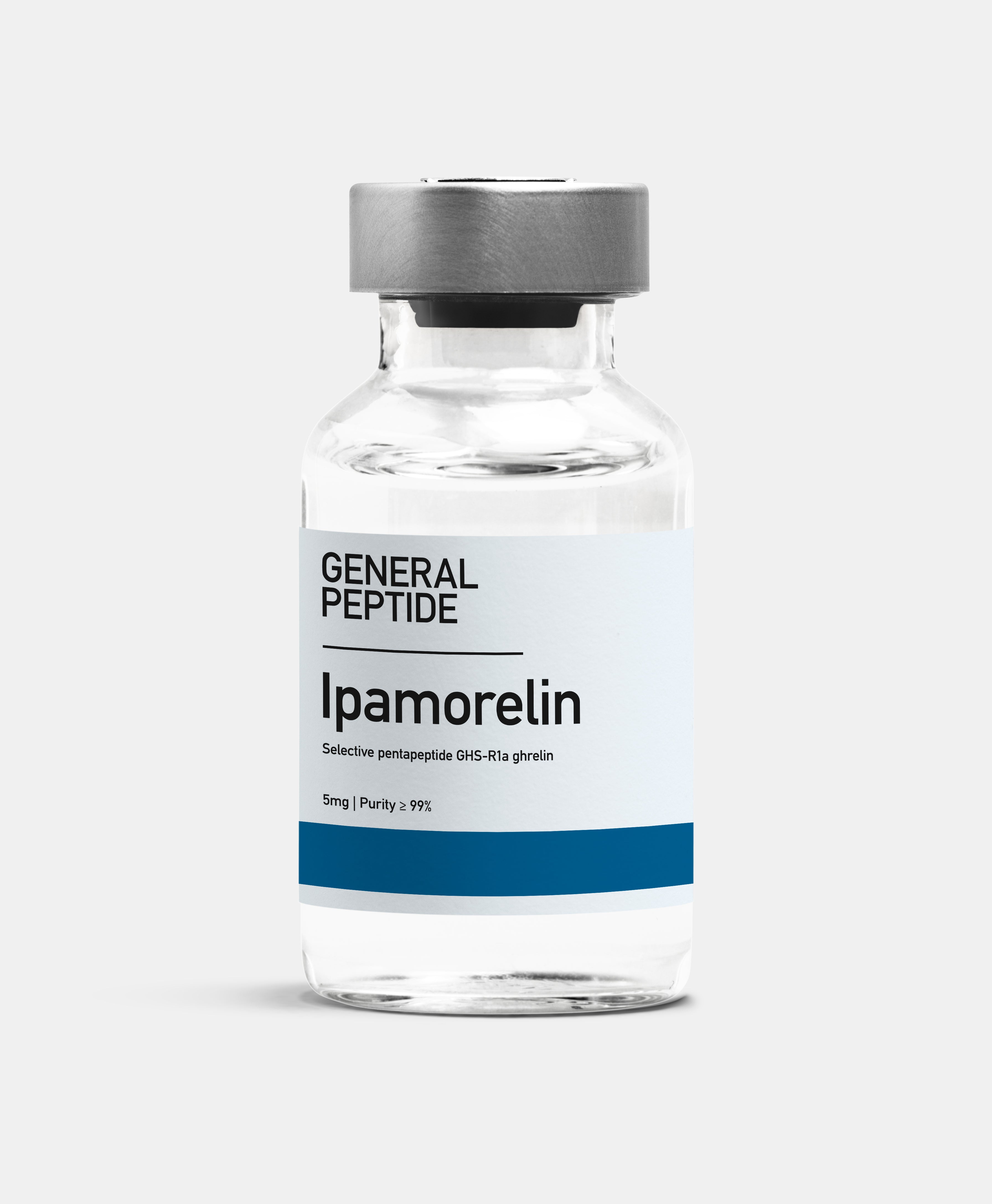
Ipamorelin is a selective pentapeptide GHS-R1a (ghrelin receptor) agonist (CAS 170851-70-4; MW 711.9 g/mol) that functions through Ca2+/IP3 signaling pathways. It represents the most selective growth hormone-releasing peptide (GHRP) available for clean GH secretagogue research, as it does not stimulate ACTH, cortisol, or prolactin at research concentrations.
As a fifth-generation GHRP, Ipamorelin demonstrates exceptional receptor selectivity, binding specifically to the ghrelin receptor (GHS-R1a) on pituitary somatotroph cells without off-target effects on other hormonal axes. This selectivity profile distinguishes it from earlier-generation GHRPs that often caused unwanted elevations in cortisol, prolactin, or ACTH, making Ipamorelin the preferred research tool for isolating GH-specific effects.
The pentapeptide structure (Aib-His-D-2-Me-Trp-Phe-Lys-NH2) mimics the endogenous ghrelin hormone while providing enhanced metabolic stability and receptor binding affinity. Upon binding to GHS-R1a, Ipamorelin triggers intracellular calcium release and inositol trisphosphate (IP3) signaling, resulting in pulsatile growth hormone release from pituitary stores.
In research applications, Ipamorelin demonstrates synergistic effects when combined with GHRH analogs like CJC-1295, as they activate complementary pathways — GHRH increases cAMP while GHS-R1a agonists increase intracellular calcium, together producing supra-additive GH release. This makes it particularly valuable for studies examining GH axis function, body composition, metabolic regulation, and age-related endocrine changes.
| Compound | MW / Formula | CAS No. | Sequence / Structure | Receptor / Target |
|---|---|---|---|---|
| Ipamorelin | C38H49N9O5 / 711.9 g/mol | 170851-70-4 | Pentapeptide ghrelin mimetic | GHS-R1a agonist; no ACTH/cortisol stimulation |
The following compounds operate through distinct, non-overlapping mechanisms that complement this product's research pathways. Each is independently available from the General Peptide catalog.
CJC-1295 (No DAC) is a modified 29-amino acid GHRH analog featuring four amino acid substitutions that enhance alpha-helical structure and confer 49x greater receptor potency versus native GHRH. Without the Drug Affinity Complex (DAC), this ver...
This triple-blend combines two Growth Hormone Releasing Hormones (Tesamorelin, CJC-1295) with a selective ghrelin mimetic (Ipamorelin) to maximize pulsatile GH secretion. By targeting pituitary somatotrophs through distinct pathways, it synergi...
Retatrutide (LY3437943) is an advanced 39-amino acid synthetic peptide that simultaneously activates GLP-1, GIP, and glucagon receptors. This triple-agonist action coordinates appetite suppression, enhanced insulin dynamics, and increased hepat...
MOTS-c is a unique 16-amino acid peptide encoded by the mitochondrial genome rather than nuclear DNA. It functions as a potent metabolic regulator and "exercise mimetic" by translocating to the nucleus to activate AMPK, optimizing cellular ener...
NAD+ is a vital dinucleotide coenzyme present in all living cells, central to cellular energy, DNA repair, and signaling. It fuels ATP production and acts as the rate-limiting substrate for Sirtuins, PARPs, and CD38 enzymes. Because NAD+ levels...