MOTS-c
MOTS-c is a unique 16-amino acid peptide encoded by the mitochondrial genome rather than nuclear DNA. It functions as a potent metabolic regulator and "exercise mimetic" by translocating to the nucleus to activate AMPK, optimizing cellular energy, insulin sensitivity, and lipid oxidation.
Key Research Highlights
- Metabolic Regulation: Activates AMPK to enhance glucose metabolism and fatty acid oxidation, mimicking the effects of exercise.
- Mitochondrial Signaling: Unique retrograde peptide bridging mitochondrial dysfunction and nuclear gene regulation.
- Longevity Focus: Investigated for protective effects against obesity, insulin resistance, and age-related sarcopenia.
- Synergistic Potential: Pairs effectively with NAD+ and Epithalon for comprehensive aging protocols.
- Verified Quality: 10mg lyophilized powder, ≥99% HPLC purity, ISO 17025 verified.
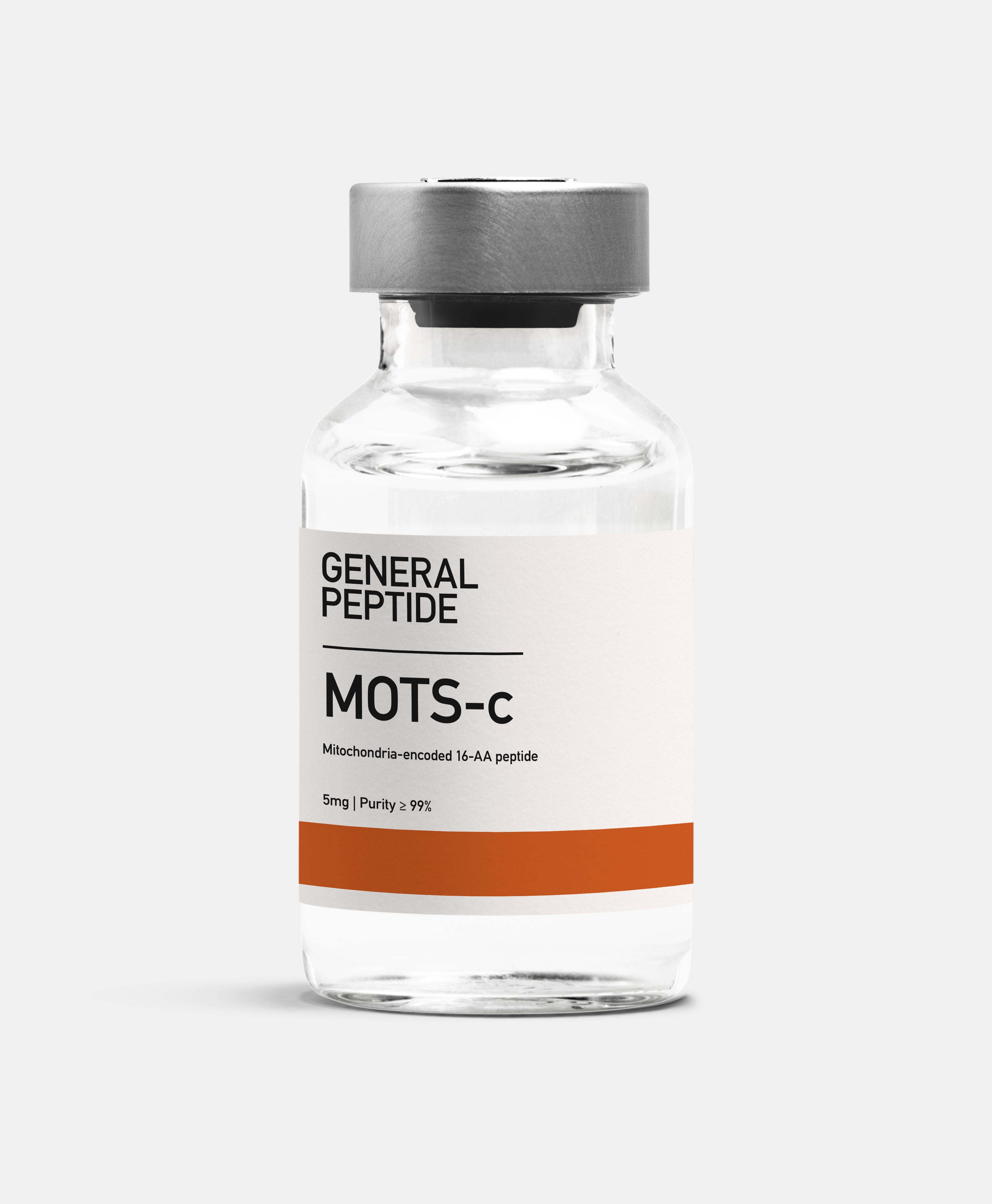
MOTS-c (CAS 1627580-64-6; MW 1817.1 g/mol; sequence MRWQEMGYIFYPRKLR) is a 16-amino acid peptide encoded not by nuclear DNA, but by the mitochondrial genome itself — within the 12S ribosomal RNA gene. Its discovery challenged the established view that mitochondria are passive ATP-producing organelles. MOTS-c is the first mitochondrial-derived peptide (MDP) demonstrated to translocate from mitochondria to the cell nucleus and directly regulate nuclear gene expression, placing it at the intersection of mitochondrial biology and nuclear gene regulation.
At the mechanistic level, MOTS-c activates AMPK (AMP-activated protein kinase) — the master cellular energy sensor — and inhibits the folate-methionine one-carbon metabolism pathway. This inhibition reduces energetically taxing de novo purine synthesis during metabolic stress, while AMPK activation redirects cellular resources toward fuel oxidation. Net effects in research models include: decreased oxygen consumption and reactive oxygen species (ROS); maintained mitochondrial membrane potential; improved insulin sensitivity and glucose metabolism; and reduced intracellular metabolites linked to insulin resistance.
Exercise-mimetic properties have been characterized in research subject models — MOTS-c administration in sedentary animals produced metabolic gene expression patterns similar to exercise-trained animals, including upregulation of fatty acid oxidation pathways and mitochondrial biogenesis markers.
Protective effects against obesity, type 2 diabetes, osteoporosis, age-related sarcopenia, and all-cause mortality in multiple animal aging models have been documented, positioning MOTS-c as one of the most compelling longevity-focused research peptides currently available.
| Compound | Formula | MW | CAS No. | Sequence / Structure | Receptor / Target |
|---|---|---|---|---|---|
| MOTS-c | C78H149N29O20 | 1817.1 g/mol | 1627580-64-6 | MRWQEMGYIFYPRKLR — 16-AA mitochondrial 12S rRNA-encoded peptide | AMPK activator; mitochondria-to-nucleus retrograde signaling; exercise mimetic |
The following compounds operate through distinct, non-overlapping mechanisms that complement this product's research pathways. Each is independently available from the General Peptide catalog.
NAD+ is a vital dinucleotide coenzyme present in all living cells, central to cellular energy, DNA repair, and signaling. It fuels ATP production and acts as the rate-limiting substrate for Sirtuins, PARPs, and CD38 enzymes. Because NAD+ levels...
Epithalon is a highly stable synthetic tetrapeptide modeled after a natural pineal gland polypeptide. It functions as a potent telomerase activator and bioregulator, working to elongate telomeres, extend cellular replicative lifespan, and norma...
Retatrutide (LY3437943) is an advanced 39-amino acid synthetic peptide that simultaneously activates GLP-1, GIP, and glucagon receptors. This triple-agonist action coordinates appetite suppression, enhanced insulin dynamics, and increased hepat...
SS-31 (Elamipretide; D-Arg-Dmt-Lys-Phe-NH2; CAS 736992-21-5; MW 639.8 g/mol) is a D-amino acid tetrapeptide that selectively targets the inner mitochondrial membrane through electrostatic interaction with cardiolipin. Accumulating at ~10,000x g...
Thymalin (Thymulin; CAS 66017-93-4; MW 857.9 g/mol) is a 9-amino acid zinc-dependent polypeptide bioregulator produced by the thymus gland that restores thymic microenvironment function and normalizes T-lymphocyte and B-lymphocyte counts. Disti...