BPC-157
BPC-157 (Body Protection Compound-157) is a 15-amino acid pentadecapeptide that functions as a potent systemic protector. Exceptionally stable, it activates VEGF/VEGFR2-Akt-eNOS angiogenic signaling, modulates the nitric oxide system, and provides vascular priming and cytoprotection to accelerate structural healing.
Key Research Highlights
- Angiogenesis & Healing: Promotes blood vessel formation and cellular survival via VEGF pathway activation.
- Broad Tissue Targeting: Ideal for gastrointestinal, musculoskeletal, tendon, ligament, neurological, and dermal injury models.
- Exceptional Stability: Unique structure remains highly active and stable, even in harsh gastric environments.
- Verified Quality: Lyophilized white powder, ≥99% HPLC purity, ISO 17025 verified.
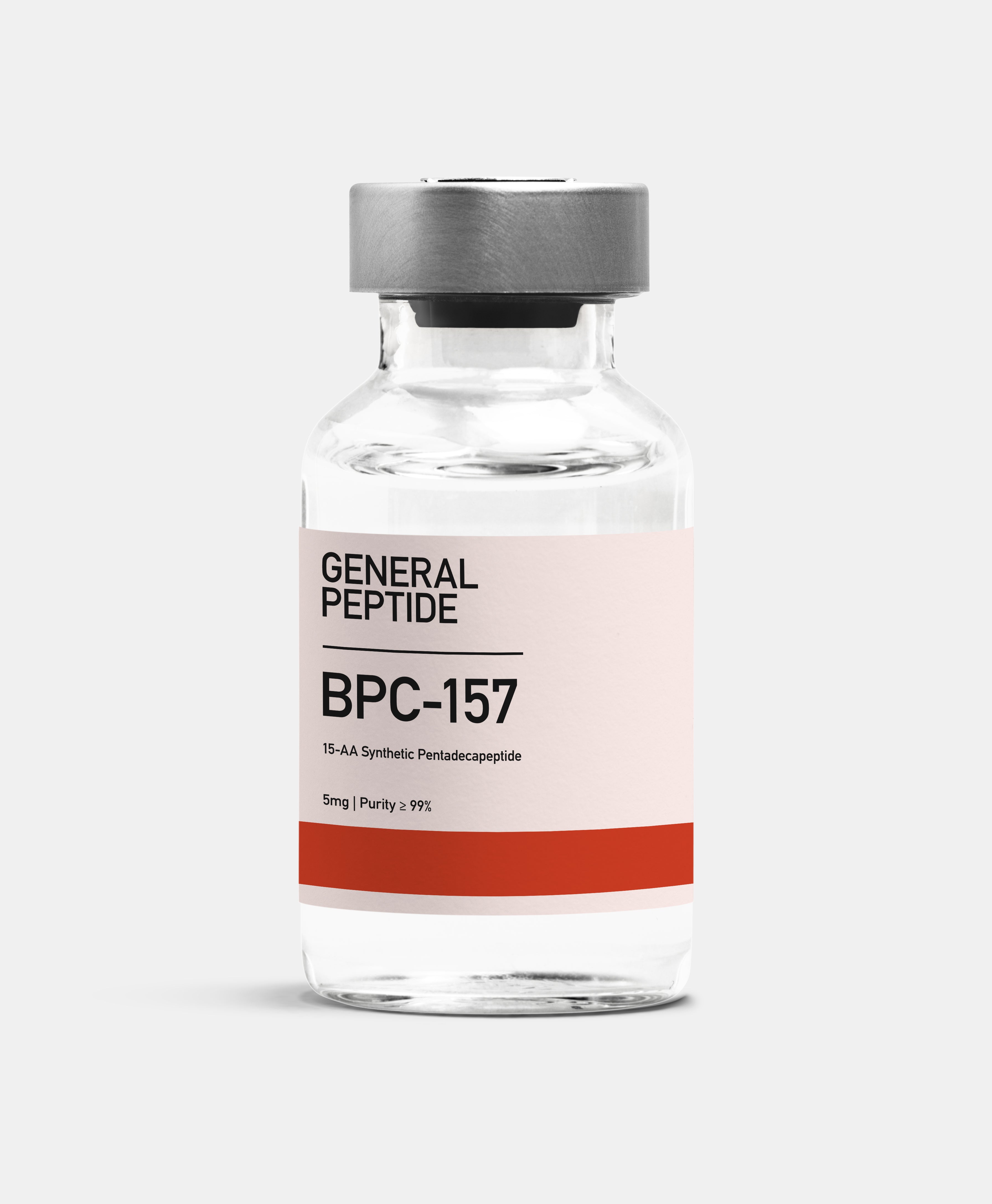
BPC-157 is a synthetic 15-amino acid pentadecapeptide (sequence GEPPPGKPADDAGLV; CAS 137525-51-0; MW 1419.5 g/mol) originally characterized from a protein sequence found in human gastric juice. It holds a distinctive position in peptide research for two reasons: the remarkable breadth of biological systems in which research activity has been demonstrated, and its exceptional physicochemical stability — particularly its documented resistance to degradation in the highly acidic, enzyme-rich environment of simulated gastric juice for periods exceeding 24 hours.
The primary studied mechanism centers on the VEGF/VEGFR2-Akt-eNOS signaling axis. Research data consistently show BPC-157 activating this pathway to promote angiogenesis — the formation of new capillary networks — at injury sites. Concurrently, it modulates the nitric oxide (NO) system, upregulates Early Growth Response gene 1 (EGR-1), and demonstrates anti-inflammatory activity through reduction of pro-inflammatory cytokine expression.
In musculoskeletal models, BPC-157 has demonstrated accelerated tendon-to-bone healing, improved ligament repair, and enhanced muscle regeneration following crush injury. In gastrointestinal models — the tissue system most studied given its gastric origin — it has shown ulcer healing, fistula repair, and inflammatory bowel disease model improvement. Neurological models have documented cytoprotective effects including dopaminergic system modulation, spinal cord injury improvement, and peripheral nerve regeneration.
Each General Peptide vial is independently verified by ISO 17025-accredited third-party U.S. laboratories using HPLC purity analysis, mass spectrometry identity confirmation, net content verification, ICP-MS heavy metal screening, and LAL endotoxin assay — with the full Certificate of Analysis published for every batch.
| Compound | Formula | MW | CAS No. | Sequence / Structure | Receptor / Target |
|---|---|---|---|---|---|
| BPC-157 | C62H98N16O22 | 1419.5 g/mol | 137525-51-0 | GEPPPGKPADDAGLV | 15-AA synthetic pentadecapeptide; VEGF/NO/EGR-1 modulator |
The following compounds operate through distinct, non-overlapping mechanisms that complement this product's research pathways. Each is independently available from the General Peptide catalog.
The BPC-157 & TB-500 Tissue Repair Blend is a precision-formulated combination of two extensively studied peptides designed to support comprehensive tissue regeneration. By combining 5mg of each compound, this synergistic formula targets mu...
GHK-Cu is a naturally occurring tripeptide-copper complex that acts as a powerful genetic modulator, influencing over 4,000 human genes related to tissue repair and anti-aging. It functions by activating matrix metalloproteinases (MMPs) and sti...
NAD+ is a vital dinucleotide coenzyme present in all living cells, central to cellular energy, DNA repair, and signaling. It fuels ATP production and acts as the rate-limiting substrate for Sirtuins, PARPs, and CD38 enzymes. Because NAD+ levels...
Thymalin (Thymulin; CAS 66017-93-4; MW 857.9 g/mol) is a 9-amino acid zinc-dependent polypeptide bioregulator produced by the thymus gland that restores thymic microenvironment function and normalizes T-lymphocyte and B-lymphocyte counts. Disti...
Semax is a synthetic heptapeptide (MEHFPGP) derived from ACTH(4-7) with enhanced enzymatic stability. This nootropic rapidly upregulates BDNF and NGF while activating dopaminergic, serotonergic, and cholinergic systems to support cognitive enha...