Survodutide
Survodutide (BI 456906; CAS 2550858-00-7) is a dual GLP-1R/GCGR agonist developed by Boehringer Ingelheim that emphasizes hepatic fat-burning and energy expenditure via glucagon receptor activation alongside GLP-1 receptor-mediated appetite suppression. Unlike triple agonists, this focused dual-agonist approach provides a valuable research tool for investigating the specific contributions of glucagon signaling in metabolic disease. Phase II trials in NASH/MASLD demonstrated significant hepatic fat reduction, with Phase III SURRECT trials ongoing. The fatty acid conjugation ensures extended half-life for sustained receptor activation, making it ideal for investigating hepatic metabolism, energy expenditure, and next-generation incretin-based therapeutics.
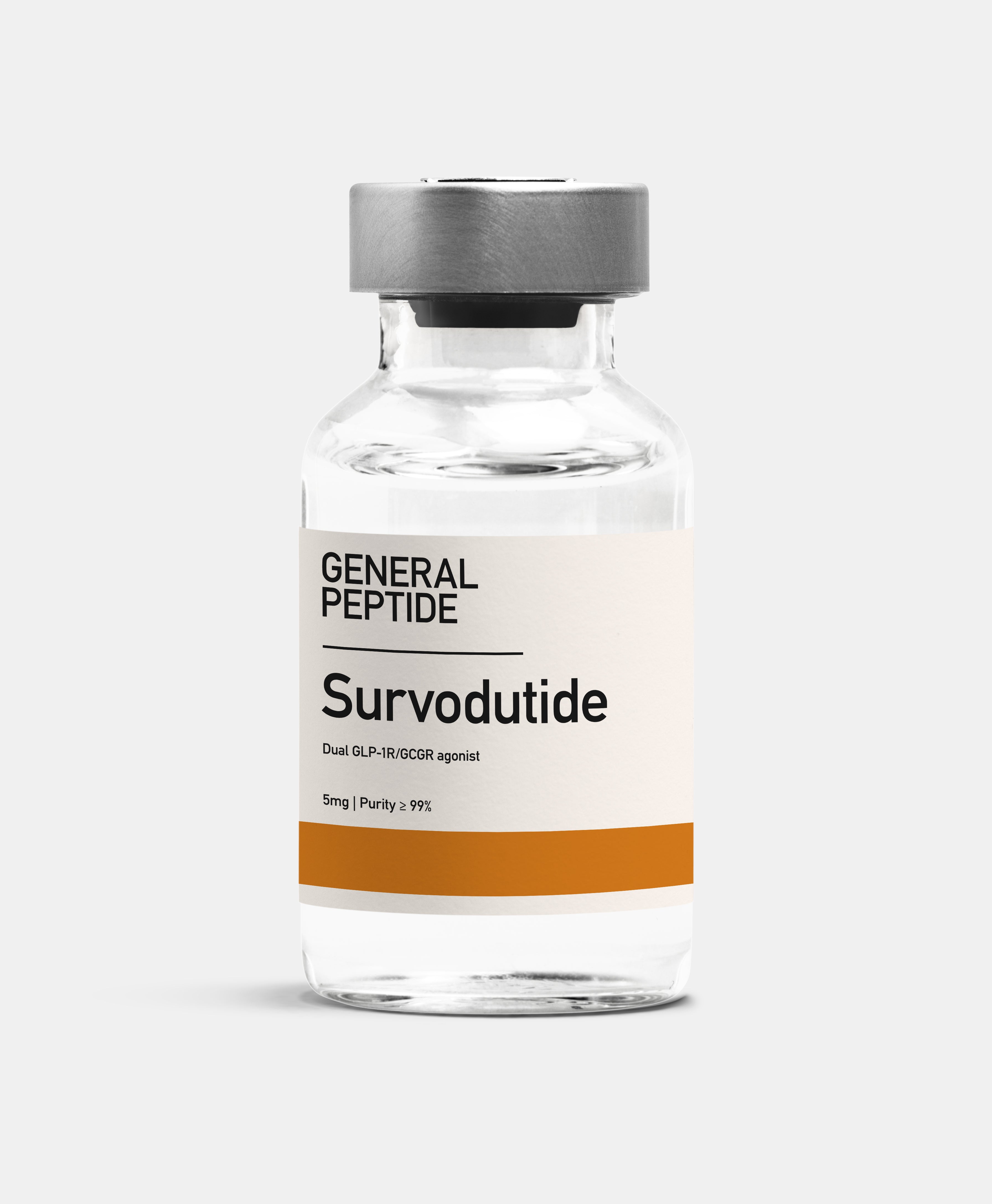
Survodutide (BI 456906; CAS 2550858-00-7) is a dual GLP-1R/GCGR agonist developed to investigate the combined metabolic effects of glucagon-like peptide-1 receptor and glucagon receptor activation. Unlike triple agonists that additionally target GIP receptors, Survodutide focuses specifically on the GLP-1/glucagon axis, emphasizing appetite regulation alongside hepatic fat metabolism and energy expenditure. Phase II investigations in NASH and MASLD have demonstrated meaningful reductions in hepatic fat content, while Phase III SURRECT studies continue to evaluate its broader clinical potential. This receptor-selective profile makes Survodutide an important comparator for understanding the contribution of individual metabolic pathways in multi-receptor agonist research.
Survodutide functions as a balanced dual agonist targeting both the glucagon-like peptide-1 receptor (GLP-1R) and the glucagon receptor (GCGR). Fatty acid conjugation promotes albumin binding and extends circulating half-life, enabling prolonged receptor engagement characteristic of modern incretin-based compounds. Through this dual mechanism, GLP-1 receptor activation contributes to appetite suppression and glucose-dependent insulin secretion, while glucagon receptor activation enhances hepatic lipid utilization and increases energy expenditure.
In research applications, Survodutide has generated particular interest in models of non-alcoholic steatohepatitis (NASH) and metabolic dysfunction-associated steatotic liver disease (MASLD). Activation of glucagon receptor pathways promotes hepatic fat oxidation and improved lipid handling, directly addressing pathological hepatic fat accumulation. At the same time, GLP-1 receptor signaling supports improved glycemic regulation and reduced caloric intake, providing a comprehensive framework for studying interconnected aspects of metabolic dysfunction.
The dual-agonist strategy offers a more focused approach than triple-receptor compounds, allowing researchers to evaluate the specific physiological contributions of glucagon receptor signaling when paired with GLP-1 activity. This makes Survodutide a valuable tool for dissecting receptor-specific mechanisms involved in hepatic metabolism, body-weight regulation, energy homeostasis, and the development of next-generation metabolic therapeutics.
| Compound | MW / Formula | CAS No. | Sequence / Structure | Receptor / Target |
|---|---|---|---|---|
| Survodutide (BI 456906) | - | 2550858-00-7 | Dual GLP-1R/GCGR agonist; fatty acid-conjugated for extended half-life | GLP-1 receptor and glucagon receptor agonist; hepatic fat oxidation and appetite regulation |