PE-22-28
PE-22-28 is a 7-amino acid synthetic analog of spadin functioning as a TREK-1 potassium channel antagonist for rapid antidepressant research. By blocking TREK-1 channels in the raphe nucleus, it rapidly increases serotonin availability and produces antidepressant effects within hours in preclinical models, significantly faster than traditional SSRIs. The peptide also demonstrates hippocampal BDNF upregulation and neuroplasticity-enhancing effects through its unique ion channel modulation mechanism. This distinct pathway makes it compatible with other neuromodulatory compounds and ideal for depression, anxiety, neurogenesis, and mood disorder research examining novel therapeutic targets beyond monoamine reuptake inhibition.
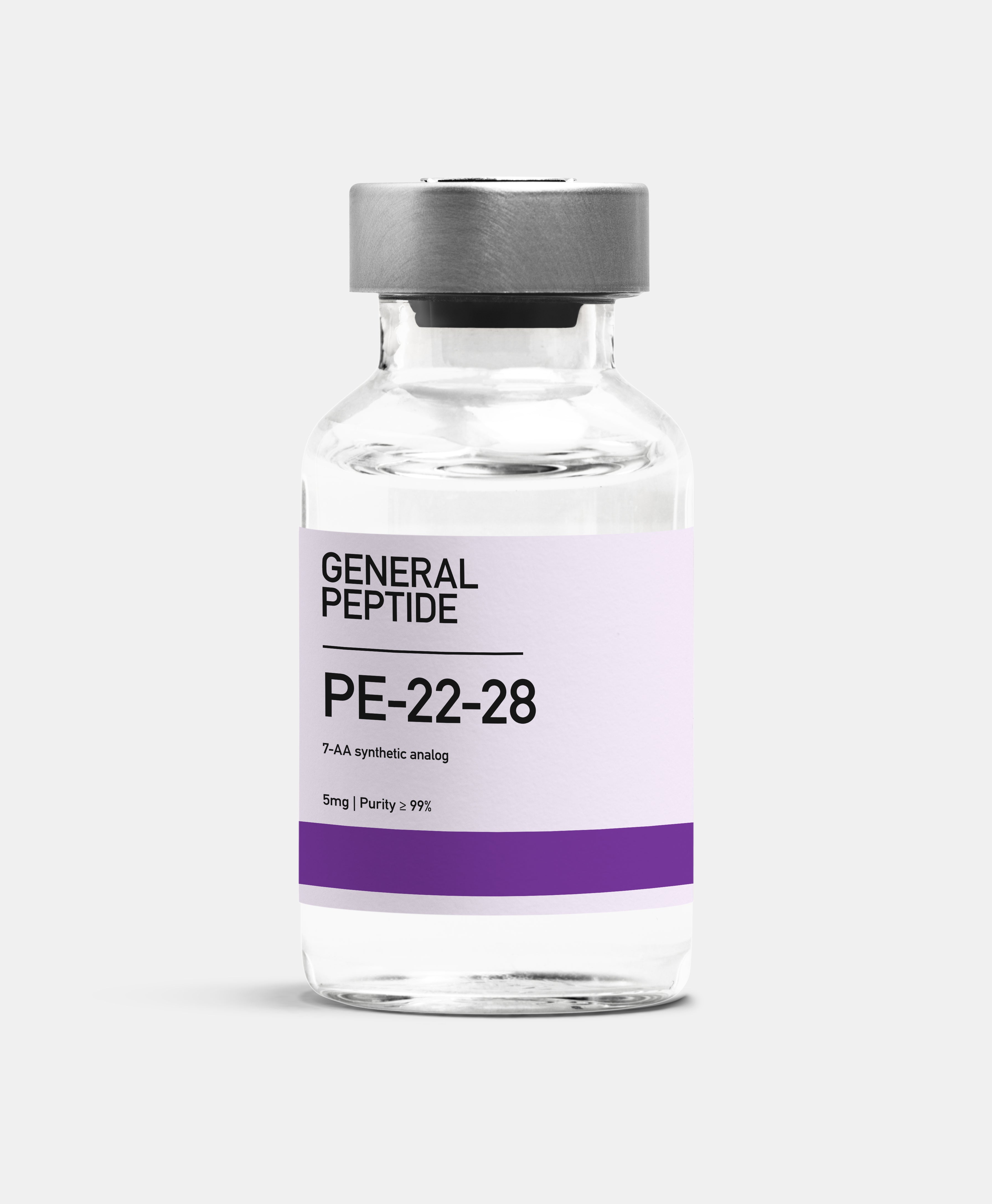
PE-22-28 is a 7-amino acid synthetic analog of spadin that functions as an antagonist of TREK-1, a two-pore domain K2P potassium channel encoded by the KCNK2 gene. TREK-1 channels normally regulate neuronal excitability and suppress serotonergic neuron activity within the raphe nuclei. By inhibiting this channel, PE-22-28 increases serotonin availability and has demonstrated rapid antidepressant-like effects in preclinical models. The peptide has also been associated with enhanced hippocampal BDNF expression and neuroplastic adaptations, making it a valuable research tool for investigations involving depression, anxiety, neurogenesis, and cognitive function.
This synthetic spadin analog represents a distinct strategy for mood disorder research by targeting ion channel function rather than directly inhibiting monoamine reuptake. TREK-1 channels contribute to the maintenance of neuronal resting membrane potential and help regulate serotonin neuron firing rates. Antagonism of these channels disinhibits serotonergic signaling pathways, resulting in increased serotonin release and downstream molecular responses involved in neuronal adaptation.
In research applications, PE-22-28 has demonstrated rapid antidepressant-like activity in behavioral models, often producing measurable effects within hours rather than the prolonged onset typically observed with conventional SSRI compounds. Experimental findings suggest that its activity involves both acute enhancement of serotonergic transmission and longer-term neuroplastic changes, including increased expression of brain-derived neurotrophic factor (BDNF) within the hippocampus. This combination of neurotransmitter modulation and neurotrophic support distinguishes it from traditional antidepressant approaches.
The peptide's mechanism may also complement other neuromodulatory compounds because it operates through potassium channel blockade rather than receptor agonism or neurotransmitter reuptake inhibition. This unique pathway provides opportunities for research exploring synergistic mechanisms underlying mood regulation, stress resilience, cognitive performance, and neural plasticity.
| Compound | MW / Formula | CAS No. | Sequence / Structure | Receptor / Target |
|---|---|---|---|---|
| PE-22-28 | ~800 g/mol (estimated) | - | 7-amino acid synthetic spadin analog; TREK-1 antagonist | TREK-1 K2P channel blocker; serotonin enhancer; neuroplasticity promoter |