Mazdutide
Mazdutide (IBI362/LY3305677) is a dual GLP-1R/GCGR agonist structurally modeled on oxyntomodulin, becoming the world's first GLP-1/glucagon dual receptor agonist approved for weight management (China, June 2025, brand name Xinermei). Developed by Innovent Biologics and Eli Lilly, it combines GLP-1-mediated appetite suppression with glucagon-mediated hepatic fat oxidation, increased energy expenditure, and thermogenesis. Phase 3 GLORY-2 trial achieved 20.1% mean weight reduction with only 2.9% discontinuation rate — remarkably low for this class. The oxyntomodulin-derived structure with fatty-acyl modification provides once-weekly dosing and superior tolerability compared to tirzepatide. As the most recently approved dual agonist (2025), it represents the cutting edge of GLP-1/glucagon research.
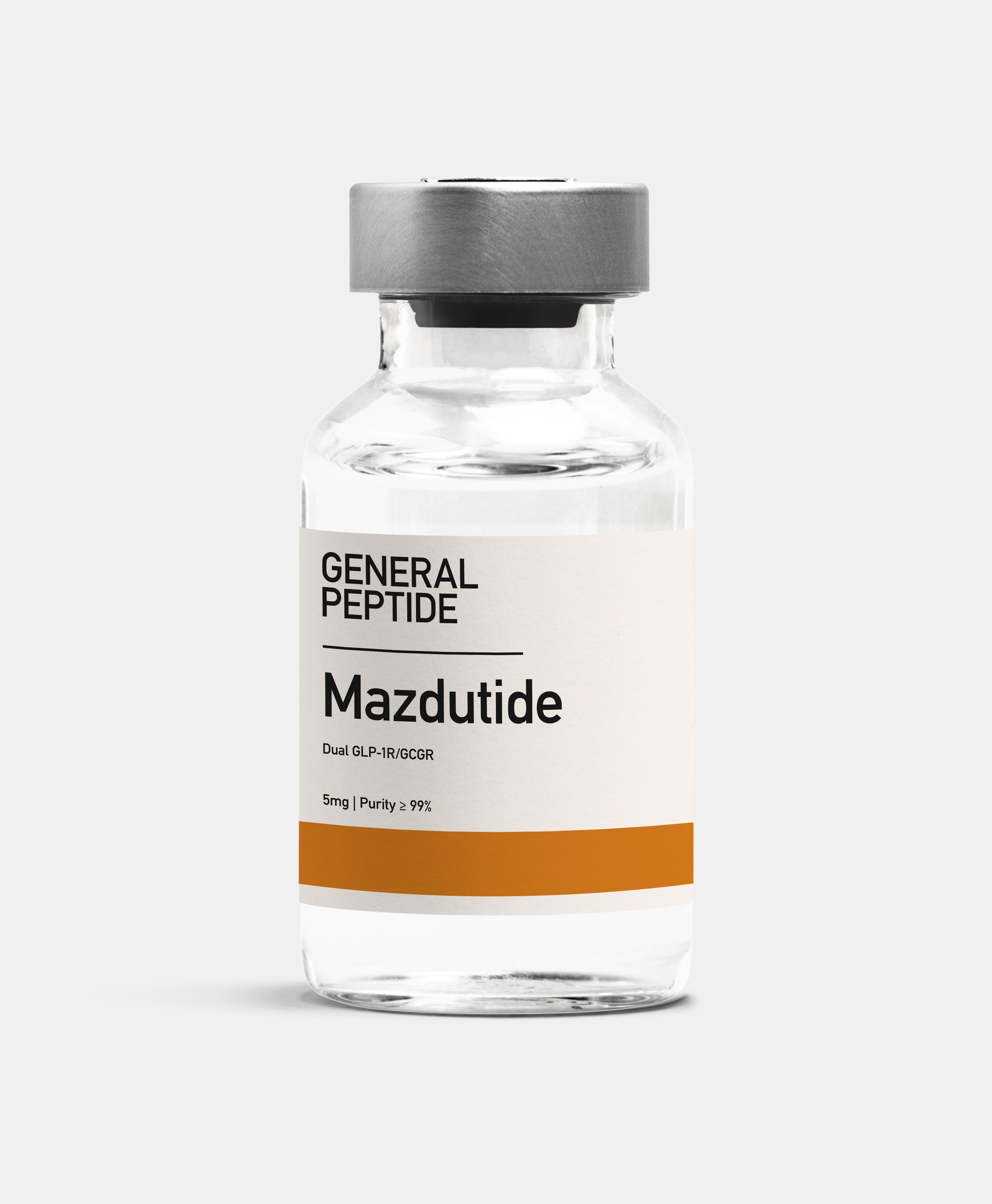
Mazdutide (IBI362 / LY3305677; CAS pending) is a dual GLP-1R/GCGR (glucagon receptor) agonist structurally modeled on oxyntomodulin — the body's natural co-activator of both GLP-1 and glucagon receptors. Developed by Innovent Biologics in collaboration with Eli Lilly, Mazdutide became the world's first GLP-1/glucagon dual receptor agonist approved for weight management, receiving approval in China in June 2025 under the brand name Xinermei. This regulatory milestone makes it one of the most current research compounds in the catalog — moving from Phase 3 to approved drug in 2025.
Mechanism: GLP-1R activation provides appetite suppression and insulin dynamics (same as semaglutide); GCGR activation adds hepatic fat oxidation, increased energy expenditure, and thermogenesis — the glucagon-mediated dimension that Survodutide and Retatrutide also leverage, but in Mazdutide's unique oxyntomodulin-derived structural framework. Phase 3 GLORY-2 trial (2025): Mazdutide 9 mg achieved 20.1% mean body weight reduction, with only 2.9% discontinuation due to adverse events — a remarkably low dropout rate for this class. Phase 2 head-to-head vs. semaglutide: Mazdutide outperformed semaglutide for both weight loss and glycemic control. Side effects: primarily mild GI (nausea, diarrhea) — consistent with class profile but with lower severity than tirzepatide in comparative data.
This oxyntomodulin-based dual agonist represents a distinct structural approach to GLP-1/glucagon co-agonism, leveraging the natural template that evolution designed for coordinated incretin and glucagon signaling. The fatty-acyl modification provides extended half-life and albumin binding for once-weekly dosing, similar to other modern incretin-based therapeutics.
In research applications, Mazdutide demonstrates the unique combination of GLP-1-mediated appetite suppression with glucagon-mediated hepatic fat oxidation and thermogenesis. The glucagon receptor component increases energy expenditure and promotes fat burning in the liver, while the GLP-1 component controls appetite and improves insulin dynamics. This dual action produces superior weight loss outcomes compared to GLP-1 mono-agonists while maintaining an excellent tolerability profile.
The remarkably low 2.9% discontinuation rate in Phase 3 trials distinguishes Mazdutide from other dual and triple agonists, suggesting that the oxyntomodulin-derived structure may provide better tolerability than de novo designed sequences. This makes it valuable for research examining the relationship between molecular structure, receptor balance, and clinical tolerability in multi-receptor agonists.
| Compound | MW / Formula | CAS No. | Sequence / Structure | Receptor / Target |
|---|---|---|---|---|
| Mazdutide (IBI362 / LY3305677) | - | - | Dual GLP-1R/GCGR agonist; oxyntomodulin-derived; fatty-acyl modification for once-weekly dosing | Dual GLP-1 receptor + Glucagon receptor agonist; 20.1% weight loss Phase 3; approved China June 2025 |